Yes, it’s a real e-commerce email marketing case study with real screenshots.
If you’re googling:
“How do I run bilingual email marketing campaigns?”
“What’s a good segmentation strategy for ecommerce?”
“How can I increase revenue with email for a multi-brand marketplace?”
This ecommerce email marketing case study will show you what worked—step by step.
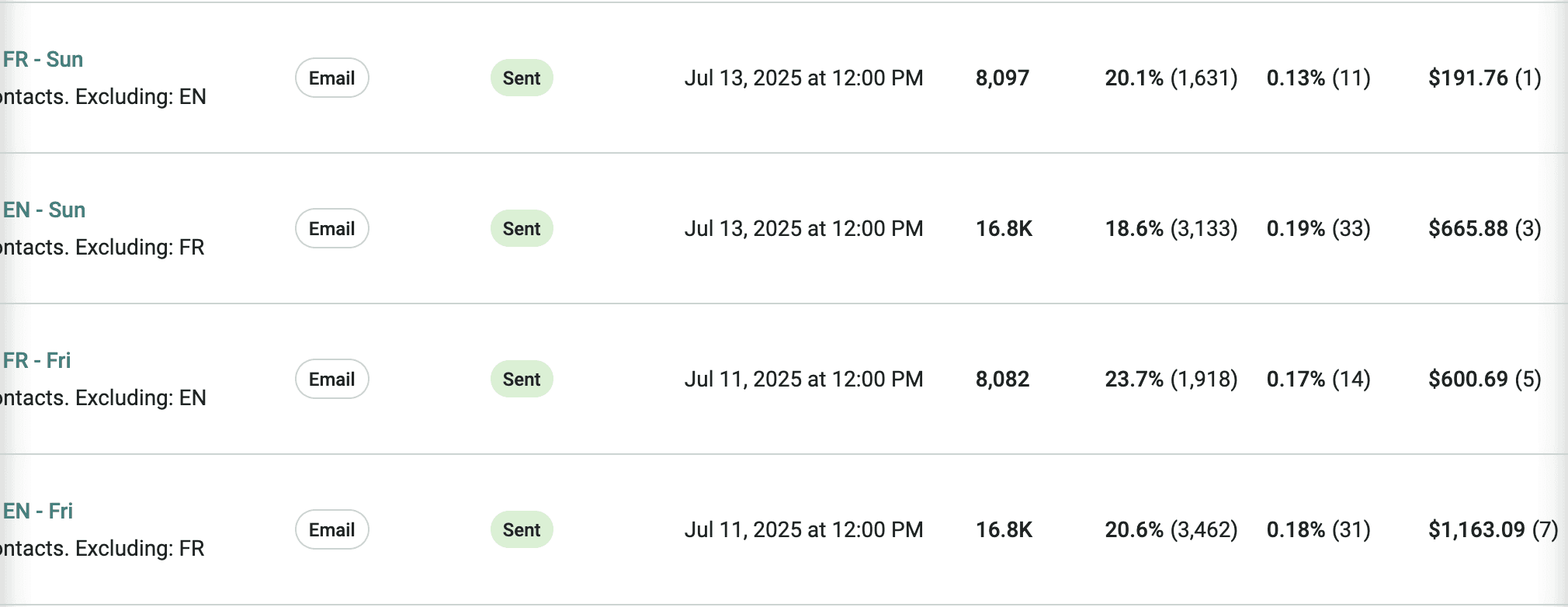
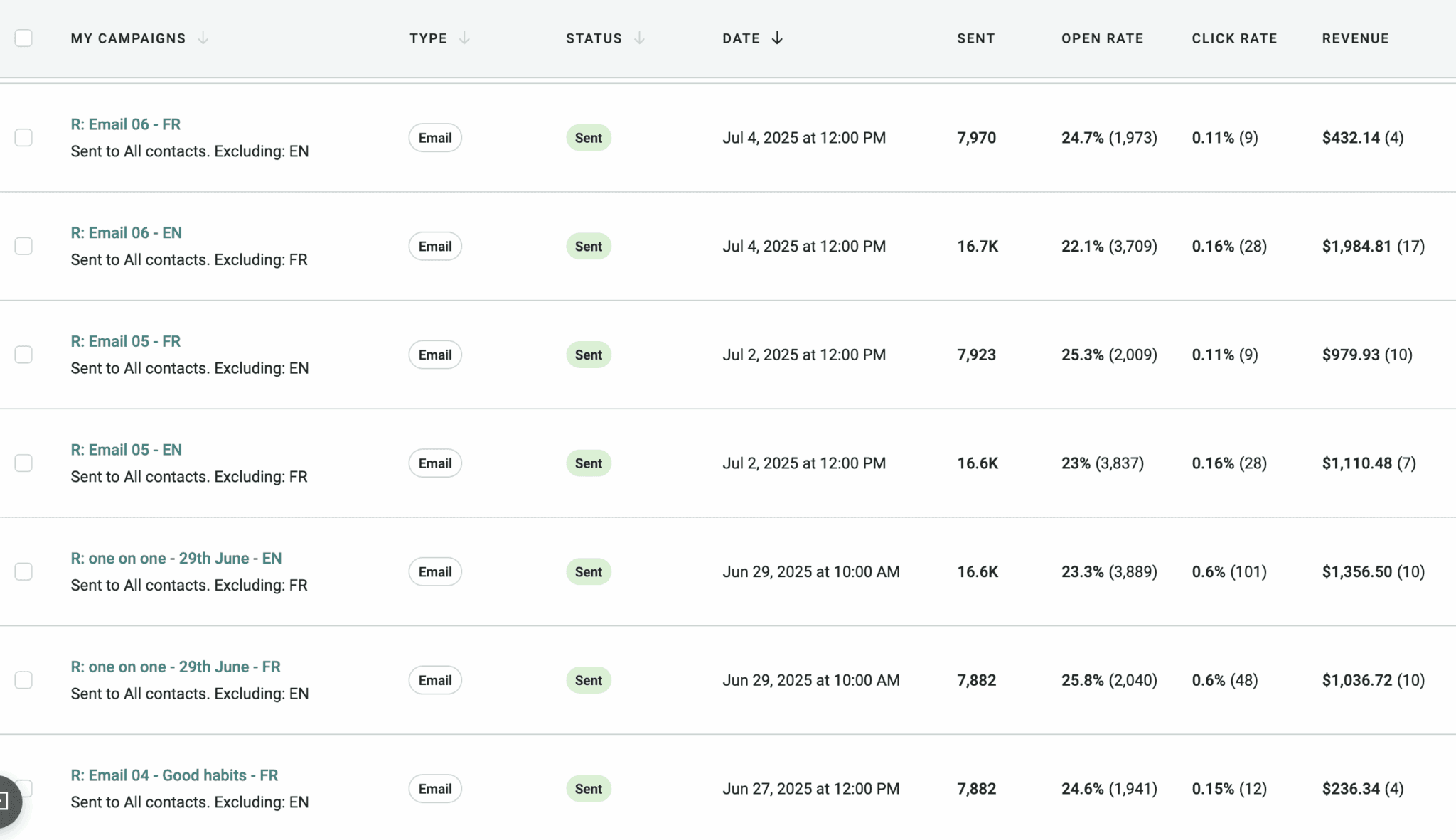
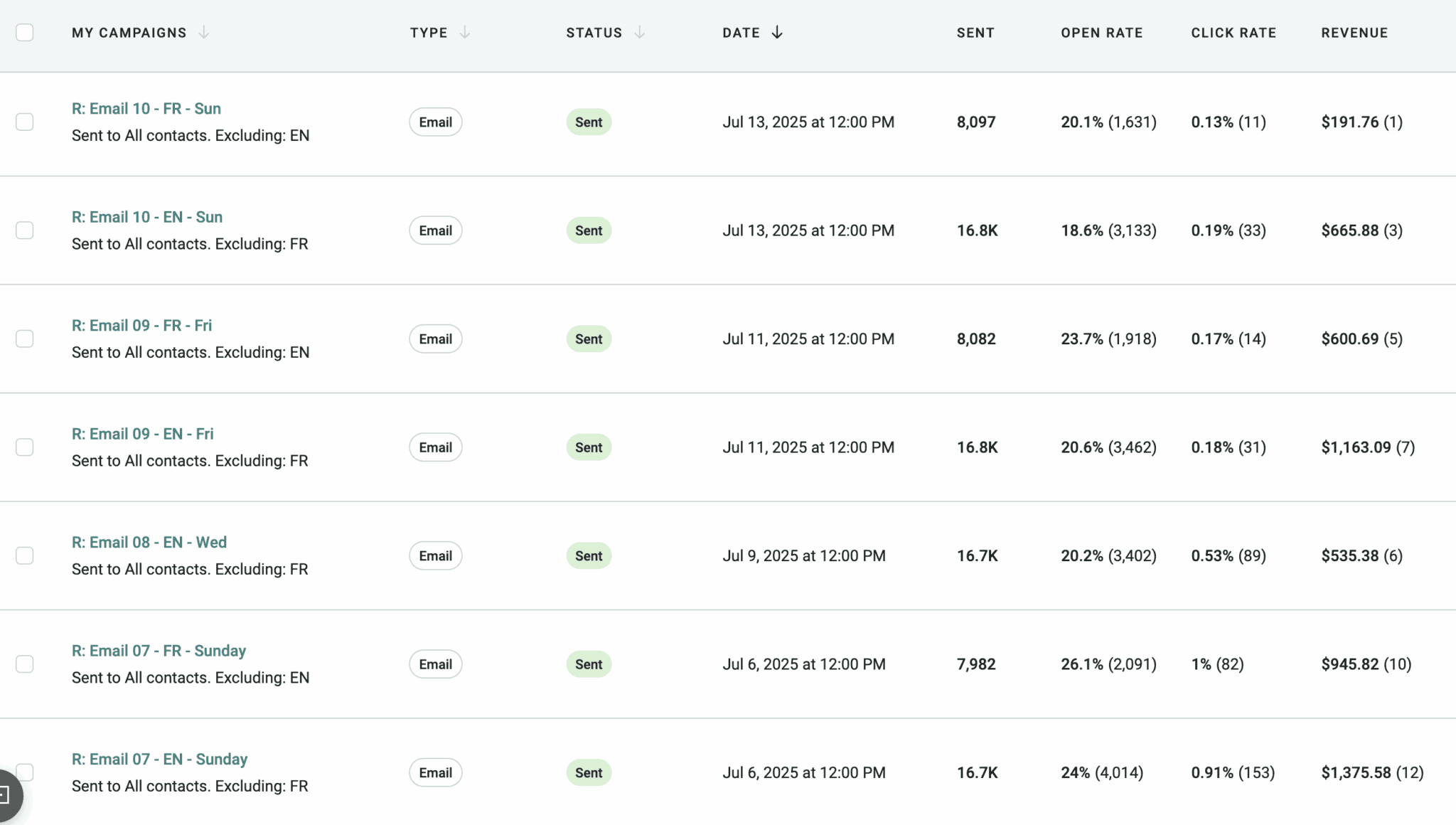
In just 30 days, we helped Vikings Nutrition generate $24,156 from email alone, using a combination of audience segmentation, bilingual campaigns, and product-led strategy.
Here’s exactly how we did it.
The Challenge: Emailing Two Languages, One Brand Voice
Vikings Nutrition had a strong product lineup and a loyal customer base—but hadn’t yet leveraged email marketing as a revenue channel.
The customer base split clearly into two key audiences:
English-speaking customers
French-speaking customers
That meant every email had to be written, designed, and adapted for both groups. No auto-translation. No generic campaigns. Everything—from tone to offers—had to feel local and intentional.
As a marketplace (not a single-brand store), they also couldn’t rely on brand name recognition. So instead of pushing Brand A or Brand B, we focused on category-led storytelling—like:
“Top Selling Vitamins”
“Best of Protein Powders”
“Pre-Workout Buddies”
The Strategy: What We Executed
1. Segmentation by Language
We created two clear audience segments:
English-speaking subscribers
French-speaking subscribers
Each email was custom-written and designed in both languages—not just translated. The tone, product highlights, and CTAs were tailored for each audience.
2. Clarity-First Content
Emails were short, sharp, and easy to scan. On mobile or desktop, the message and offer were clear within the first scroll. No fluff. No wasted lines.
3. Mixed Email Design
Some campaigns were branded templates with full-width banners and product grids. Others used minimal, sharp layouts—especially for time-sensitive promos.
Design was always matched to the message, not for aesthetics alone.
4. Data-Backed Product Picks
We used Shopify sales and browse data to decide what to promote. Campaigns were built around best-sellers and trending categories, not assumptions.
Categories converted better than brand names—especially in a marketplace model.
5. Smart CTAs
Every email included two CTAs: one near the top (above the fold), one at the bottom. This ensured readers had a clear action to take, no matter where they clicked.
The Results (30 Days)
Metric | Result |
Revenue from Email | $24,156 |
Audience Segments | 2 (English & French) |
Campaigns Sent | 10+ (each in 2 languages) |
Average Open Rate | 24% |
Top Performing Campaign Type | Category-led product emails |
Top Performing Design Style | Clean layout with header + product grid |
Both segments showed strong engagement proving that custom, bilingual email marketing works.
Screenshot 2
Screenshot 3
Learnings for E-commerce Brands
Segment by language when your customer base demands it
Focus on categories, not brands, in a multi-brand marketplace
Keep email copy clear and concise—especially above the fold
Design should match the goal (not just be “pretty”)
Use sales and browse data to choose what to promote
Final Thoughts
This email marketing case study shows how a bilingual ecommerce strategy, when paired with category-led product selection and smart segmentation, can drive serious revenue fast.
If you’re an ecommerce brand targeting multiple languages—or managing a marketplace with many products—this approach proves that personalized email marketing still works in 2025.
Explore more ecommerce case studies and strategy breakdowns on the Retain Marketing blog, or try our GPT-powered email strategy assistant.