Most ecommerce brands treat their pop-up as an afterthought.
A form that appears. Asks for an email. Offers a discount. Disappears.
What they do not realise is that their pop-up is the single most important piece of infrastructure in their entire email programme. It is the top of the funnel. Every subscriber who ever goes through a welcome flow, an abandoned cart sequence, or a win-back campaign enters the system through that form.
If the form is broken, everything below it is starved.
When this Mexican wellness supplement brand came to Retain Marketing, their pop-up was converting at 1.30%. Klaviyo rated it Poor. Out of 168,000 people who viewed the form, only 2,200 submitted it. The brand was losing the overwhelming majority of their website traffic before a single email was ever sent.
We fixed the form. The conversion rate went from 1.30% to 5.30%.
Total revenue generated: MX$1.2 million.
And the welcome flow had not even gone live yet.
About Retain Marketing
Retain Marketing is an email marketing agency working exclusively with DTC ecommerce brands doing a minimum of $50,000 per month in revenue. We work with brands across the USA, UK, Europe, and Latin America on Klaviyo account strategy, pop-up optimisation, flow architecture, zero party data collection, and campaign management. Our focus is one thing: growing the percentage of revenue your ecommerce store generates from email.
The Brand
A wellness supplement brand based in Mexico, selling directly to consumers across the Latin American market. Strong product range, significant website traffic, and a genuine customer base with repeat purchase potential.
Monthly revenue: substantial, operating at a level where email infrastructure should be generating a meaningful share of total store revenue.
The problem was not the product or the traffic. The problem was what was happening to that traffic before it ever entered the email system.
What We Found
When Retain Marketing audited the account, the pop-up data told a clear story.
1.30% submit rate. Poor.
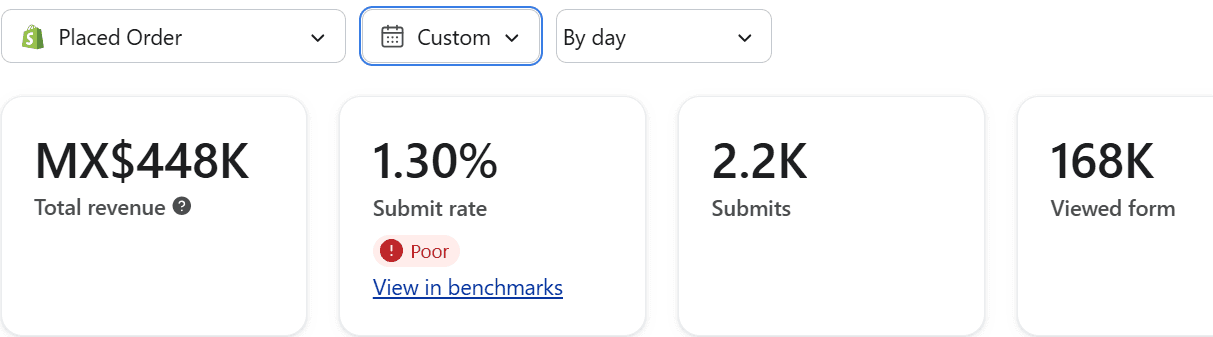
Out of every 100 people landing on the site and seeing the pop-up, fewer than two were submitting it. The other 98 were leaving without entering the email programme at all.
For a brand with significant monthly traffic, this represented an enormous and entirely preventable loss of potential subscribers every single day.
The issues were structural:
The pop-up was appearing too quickly. Visitors were being hit with a form the moment they landed on the site, before they had any context about the brand or the product. Tyre-kickers, accidental visitors, and low-intent browsers were seeing the form, dismissing it immediately, and leaving. The brand was measuring their conversion rate against their least engaged traffic.
The form was collecting basic information without understanding what the visitor actually wanted. No intelligence about product interest, health goals, or purchase intent. Just an email address and a discount code. The result was a growing list with no data behind it — subscribers who could only be communicated with generically, not specifically.
The subscriber experience was not earning the opt-in. The form was not communicating value quickly enough or clearly enough to justify a visitor giving up their email address within the first few seconds of arriving on the site.
What Retain Marketing Built
The Pop-Up Timing Experiment
The first decision was when to show the form.
We tested two trigger points: 5 seconds after page load versus 15 seconds after page load.
The 15-second trigger won. The logic is straightforward. A visitor who is still on the site after 15 seconds has made an active decision to stay. They are reading. They are interested. They have demonstrated enough engagement to be worth interrupting.
A visitor who sees a pop-up at 5 seconds has barely had time to read the headline. They dismiss the form as noise before they have any reason to care about the brand. The 5-second trigger was capturing unengaged visitors and counting their dismissals against the conversion rate.
By moving to 15 seconds, we immediately shifted the audience seeing the form toward higher-intent visitors. The tyre-kickers had already left. The people remaining were the ones worth talking to.
This single change meaningfully improved the baseline conversion rate before we changed anything else about the form itself.
Zero Party Data Collection
The second intervention was the most strategically significant.
Rather than collecting only an email address, we rebuilt the form to collect zero party data — information the visitor voluntarily provides about themselves, their interests, and their goals.
For a wellness supplement brand, this means understanding what the customer actually wants. Are they interested in energy and performance? Weight management? Recovery? General wellness? Each answer represents a completely different customer with completely different needs, different product interests, and different messaging that will resonate with them.
We designed the form to capture this information in as few clicks as possible. The experience needed to feel helpful, not interrogative. Visitors needed to feel that giving this information was in their own interest — that the brand would use it to serve them better, not to bombard them.
The result was a form that collected meaningful audience intelligence at the point of opt-in, creating a segmented list from the very first interaction rather than a homogenous mass of email addresses with no context attached.
The 6-Path Welcome Flow Architecture
The zero party data collected through the rebuilt pop-up directly informed the welcome flow architecture.
Rather than a single welcome series sent to everyone, we built six separate welcome flow paths — one for each of the six zero party data responses. A subscriber who indicates they are interested in energy and performance receives a completely different welcome sequence than a subscriber interested in recovery or weight management.
Each path speaks directly to what that specific subscriber told us they care about. The products featured are relevant to their stated interest. The copy addresses their specific goals. The offers are calibrated to their likely purchase intent.
This level of personalisation at the welcome stage is what separates a list that converts from a list that ignores you.
The welcome flow was still being finalised when the MX$1.2M revenue figure was recorded. The compounding effect of six personalised welcome paths running at full capacity will push that number significantly higher.
The Form Optimisation Itself
Beyond timing and data collection, we rebuilt the form experience from the ground up.
The value proposition was sharpened. A visitor needed to understand within seconds why giving their email address was worth their time. The form needed to communicate a clear, specific benefit immediately — not a generic "sign up for updates."
The design was optimised for the experience of engaging rather than interrupting. A wellness brand's pop-up should feel consistent with the brand's positioning. For a brand in the health and supplement space, the form needed to feel considered and credible, not transactional and aggressive.
The mobile experience was rebuilt as a priority. The majority of this brand's traffic arrives on mobile. A form designed primarily for desktop and adapted for mobile is not the same as a form built mobile-first. Every field, every button, every line of copy was sized and positioned for a thumb, not a cursor.
The Results
The before and after is documented in Klaviyo's own data.
Before:
Submit rate: 1.30% — rated Poor by Klaviyo benchmarks
Submits: 2,200
Form views: 168,000
Total revenue: MX$448,000
After:
Submit rate: 5.30% — rated Good by Klaviyo benchmarks
Submits: 6,800
Form views: 129,000
Total revenue: MX$1.2M
Submit rate improvement: 308%.
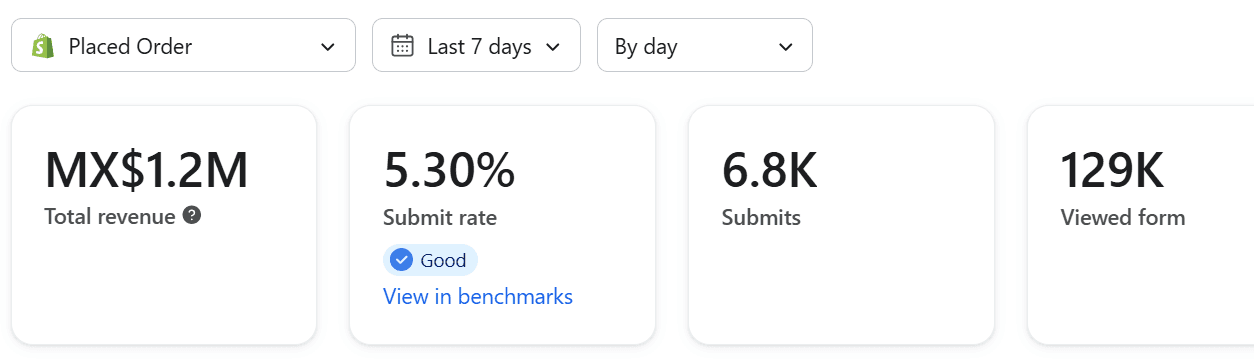
The revenue figure of MX$1.2M was generated before the six-path welcome flow went live. The infrastructure feeding that welcome flow — a properly converting pop-up collecting meaningful zero party data — is now in place. The welcome flow will compound these results further from the moment it launches.
Why This Worked
The pop-up is not a feature of an email marketing plan. It is the foundation of one.
Every flow, every campaign, every segmented send depends on the quality and volume of subscribers entering the system. A pop-up converting at 1.30% is not a minor inefficiency. It is a structural problem that caps the performance of everything downstream.
Three things drove the improvement:
Timing. Showing the form to engaged visitors rather than everyone who lands on the page fundamentally changes who you are asking. A 15-second trigger self-selects for interest. The conversion rate improves not because more people are saying yes, but because fewer uninterested people are saying no.
Zero party data. A form that asks a meaningful question before collecting an email address communicates respect for the visitor's time and intelligence. It tells them that the brand will use their information to serve them better. That promise earns the opt-in more reliably than a discount alone.
Personalisation infrastructure. Building six welcome flow paths from the zero party data responses means every subscriber immediately receives communication relevant to their stated interest. The opt-in rate improves. The engagement downstream improves. The conversion rate improves. Each element reinforces the others.
What This Means for Wellness and Supplement Ecommerce Brands
The wellness and supplement category has a specific challenge that makes pop-up optimisation particularly high-leverage.
Customers in this category are not buying on impulse. They are buying because a product addresses a specific goal or concern. A customer buying an energy supplement and a customer buying a recovery supplement are not the same person. They have different motivations, different objections, different price sensitivities, and different content that will build their trust.
Treating them identically — sending them the same welcome email, the same campaigns, the same product recommendations — is a structural failure that compounds across every communication you ever send them.
Zero party data collection at the pop-up stage is the most efficient way to solve this problem. You collect the intelligence once, at the moment of highest engagement, and it informs every interaction that follows.
For wellness brands with significant monthly traffic and a multi-product catalogue, this is not an optimisation. It is a fundamental shift in how the email programme is structured.
Frequently Asked Questions
What is zero party data and why does it matter for ecommerce email marketing?
Zero party data is information a customer voluntarily provides about themselves — their interests, goals, preferences, and purchase intent. Unlike third-party data collected without the customer's knowledge, or first-party data inferred from behaviour, zero party data is explicitly given. For ecommerce brands, collecting zero party data at the pop-up stage means every subscriber enters the email programme with a profile already attached. This enables personalised welcome flows, targeted campaigns, and product recommendations that are relevant from the very first email. The result is higher engagement, higher conversion rates, and higher lifetime value compared to a generic list with no data behind it.
What is a good pop-up conversion rate for an ecommerce brand?
Klaviyo benchmarks rate pop-up submit rates below 2% as Poor, 2% to 4% as average, and above 5% as Good. Most ecommerce brands sit between 1% and 2%, which means the majority of their website traffic is leaving without entering the email programme. A well-optimised pop-up with a clear value proposition, the right trigger timing, and a frictionless mobile experience can consistently achieve 5% or above. For a brand receiving 100,000 monthly visitors, the difference between a 1.30% and a 5.30% submit rate is approximately 4,000 additional subscribers per month entering the email programme.
Why does pop-up trigger timing affect conversion rate?
A pop-up that appears immediately on page load is shown to every visitor regardless of their intent or engagement level. Visitors who arrived accidentally, are browsing casually, or have not yet had time to understand the brand are included in the audience seeing the form. Most of them dismiss it immediately. A pop-up triggered after 15 seconds is shown only to visitors who have actively chosen to remain on the site. This self-selected audience is inherently more engaged and more likely to convert. The conversion rate improves because the audience quality improves, not because more pressure is applied.
How does a segmented welcome flow improve email revenue?
A welcome flow that sends the same sequence to every subscriber treats all customers as identical. A segmented welcome flow built on zero party data sends each subscriber content relevant to their specific stated interest. Open rates are higher because the subject lines reference topics the subscriber cares about. Click rates are higher because the products featured match the subscriber's goals. Conversion rates are higher because the offers are calibrated to the subscriber's likely purchase intent. Each of these improvements compounds across every email in the sequence and across every subscriber who enters the programme.
What kind of ecommerce brands does Retain Marketing work with?
Retain Marketing is an email marketing agency working exclusively with DTC ecommerce brands doing a minimum of $50,000 per month in revenue. We work with brands across the USA, UK, Europe, and Latin America across categories including wellness, supplements, fashion, beauty, home and lifestyle. Our entire focus is Klaviyo email and SMS marketing for ecommerce. Every strategy, flow, and campaign we build is informed by cross-brand experience in DTC specifically.
How long does pop-up optimisation take to show results?
Results from pop-up optimisation are visible immediately in Klaviyo's signup form analytics. Submit rate improvements appear within days of the new form going live. Revenue impact accumulates as the larger volume of higher-quality subscribers moves through the welcome flow and subsequent campaigns. For this Mexican wellness brand, MX$1.2M in revenue was generated before the segmented welcome flow had even launched — purely from the improved pop-up converting more engaged, better-profiled subscribers into the email programme.
Work With Retain Marketing
If your ecommerce brand has significant website traffic but an email list that is not growing at the rate it should, the pop-up is almost certainly the first thing to fix.
A form converting at 1.30% is not a minor issue. It is a structural problem capping the performance of your entire email programme.
Book a 15-minute call with Retain Marketing and we will audit your current pop-up performance and show you exactly what a properly optimised form would be worth to your business in monthly subscriber volume and revenue.